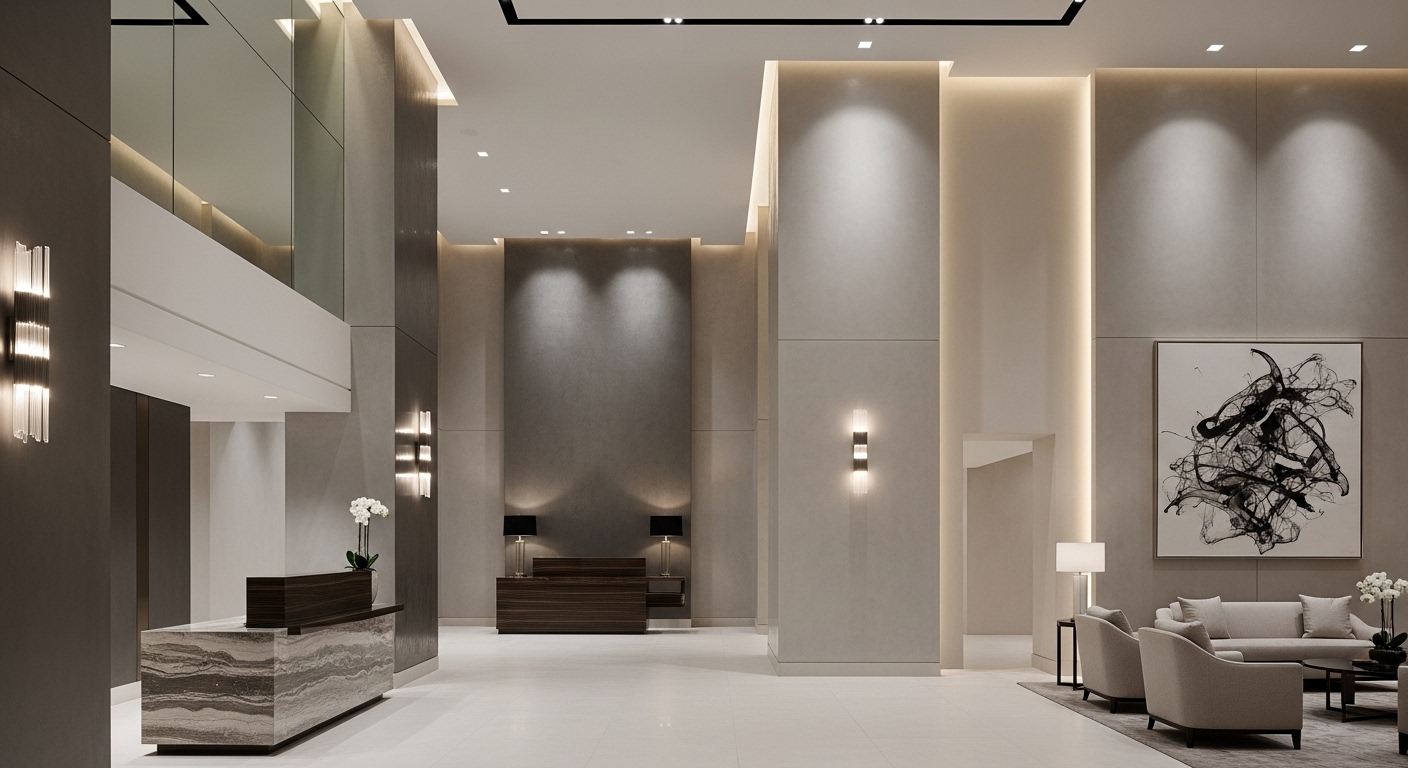
Walk into a beautifully designed hotel lobby, an upscale restaurant, or a modern corporate office, and you can feel it immediately. The space has weight. Presence. A quiet confidence that goes beyond furniture or lighting.
That feeling almost always comes from the walls. Walls set the emotional tone of a space, especially in commercial design where first impressions decide how people perceive a brand, a business, or an experience.
Designers today are under pressure to create interiors that feel refined without looking cold, luxurious without feeling overdone, and timeless without becoming boring. Clients want materials that tell a story and surfaces that feel intentional. This is where Venetian plaster steps into the spotlight.
In the world of Venetian plaster commercial interiors, this finish has become a go-to solution for designers who want depth, character, and sophistication all rolled into one. It is not just a wall treatment. It is an experience that transforms ordinary interiors into memorable environments that invite people to stay, explore, and connect.
The Emotional Impact of Handcrafted Surfaces in Luxury Interior Finishes
Here’s the thing. Humans respond emotionally to texture long before they analyze design details. Smooth, flat drywall feels neutral. Hand-applied plaster feels alive. Venetian plaster brings subtle movement to walls, catching light differently throughout the day and creating a sense of warmth that painted surfaces simply cannot replicate.
In commercial settings, this emotional response matters. Restaurants want guests to linger. Hotels want visitors to feel relaxed the moment they step inside. Offices want to project confidence and credibility. Venetian plaster supports all of that by delivering surfaces that feel crafted rather than manufactured.
Because it is applied by hand in multiple layers, every wall becomes one of a kind. That individuality communicates care and intention. It tells visitors that the space was designed thoughtfully, not rushed or mass-produced. In an era where people crave authenticity, that message is powerful.
Why Designers Are Choosing Venetian Plaster Over Traditional Luxury Interior Finishes
Design trends come and go, but Venetian plaster has endured for centuries. That staying power is no accident. Designers are increasingly turning to it because it solves multiple challenges at once.
First, it offers versatility. Venetian plaster can look understated and minimal or bold and dramatic depending on how it is applied. Second, it delivers durability. In high-traffic commercial environments, walls need to withstand wear without constant maintenance. Venetian plaster hardens over time, making it far more resilient than standard paint.
It also fits seamlessly into a wide range of architectural finish options, allowing designers to tailor the look to the specific identity of a space.
From modern offices to boutique retail environments, Venetian plaster adapts without losing its elegance. It becomes a silent partner in the design, enhancing everything around it without demanding attention.
Texture, Light, And Depth: The Design Advantage of Thoughtfully Crafted Surfaces
Lighting designers love Venetian plaster, and for good reason. Unlike flat paint, plaster reacts to light. Natural light, accent lighting, and even shadows bring out layers of depth that change throughout the day.
This dynamic quality is especially valuable in commercial interiors where lighting is often carefully planned to guide movement and mood. Venetian plaster amplifies those efforts. Walls appear richer, ceilings feel higher, and spaces gain visual interest without adding clutter.
Designers often describe this effect as quiet luxury. There is no need for excessive ornamentation. The wall itself becomes art. The finish creates subtle drama that feels intentional and refined, making it ideal for spaces that aim to impress without overwhelming.
Performance Meets Beauty in Luxury Interior Finishes for Commercial Spaces
Aesthetic appeal alone is not enough in commercial design. Materials must perform. Venetian plaster does exactly that. It is naturally breathable, which helps manage interior humidity and supports healthier indoor environments.
When paired correctly with modern construction methods, Venetian plaster works in harmony with advanced building systems, including moisture protection systems, ensuring walls remain beautiful without compromising structural integrity.
This balance of beauty and performance makes it especially attractive for long-term commercial investments.
Maintenance is another advantage. Venetian plaster does not peel or flake like paint. Minor marks can often be buffed or touched up without repainting entire walls, saving time and money over the life of the space.
From Old-World Craft to Modern Design: A Timeless Finish Reimagined
Venetian plaster has deep roots in European craftsmanship. Traditional Italian plastering techniques laid the foundation for what designers use today. That heritage brings credibility and romance to modern spaces, bridging history with contemporary design.
Today’s applications are more refined and adaptable. Designers can achieve everything from a soft, matte glow to a dramatic marble effect, depending on the desired outcome. The process allows for incredible customization, making it easy to align the finish with brand identity or architectural intent.
This adaptability is why Venetian plaster continues to find its way into cutting-edge commercial projects. It respects tradition while embracing innovation, which is exactly what modern design demands.
Elevating Brand Identity Through Luxury Interior Finishes and Surface Design
In commercial spaces, walls are not just backgrounds. They communicate brand values. A law firm may want walls that feel solid and trustworthy. A high-end retail store may want surfaces that feel artistic and expressive. Venetian plaster delivers both.
The subtle sheen and depth associated with high-end aesthetics instantly enhance a space, signaling quality before a single word is spoken. Customers may not consciously identify the finish, but they feel its impact. It shapes perception and reinforces brand positioning.
Designers also appreciate how Venetian polished plaster pairs beautifully with other decorative finishes, metals, wood, and stone. It does not compete. It complements. That balance allows the entire interior to feel cohesive and intentional.
Why Skilled Application Matters More Than Ever
Venetian plaster is not a shortcut material. Its success depends entirely on craftsmanship. Each layer must be applied with precision, patience, and experience. This is where many commercial projects either shine or fall flat.
A skilled applicator understands how to control movement, sheen, and texture. They know when to stop, when to burnish, and how to adjust technique based on lighting and space usage. The result is a wall that feels effortless, even though it required significant expertise.
This handcrafted nature is what separates Venetian plaster from synthetic wall finishes. It is not replicated by machines. It is created by human hands, and that authenticity shows.
The Finishing Touch That Defines Memorable Commercial Spaces
At its core, Venetian plaster is about more than walls. It is about atmosphere, emotion, and lasting impressions. In the realm of Venetian plaster commercial interiors, it offers designers a rare combination of beauty, durability, and character that few materials can match.
For nearly four decades, Seneca Architectural Products has supported Arizona’s design and construction community by providing materials that elevate spaces and stand the test of time.
Their deep understanding of finishes and commitment to quality makes them a trusted partner for commercial projects that demand excellence.
When designers are ready to explore the creative possibilities of Venetian plaster, including custom color matching, the right guidance makes all the difference. With thoughtful planning and expert support, Venetian plaster becomes more than a finish. It becomes the signature element that defines a space long after the first impression.